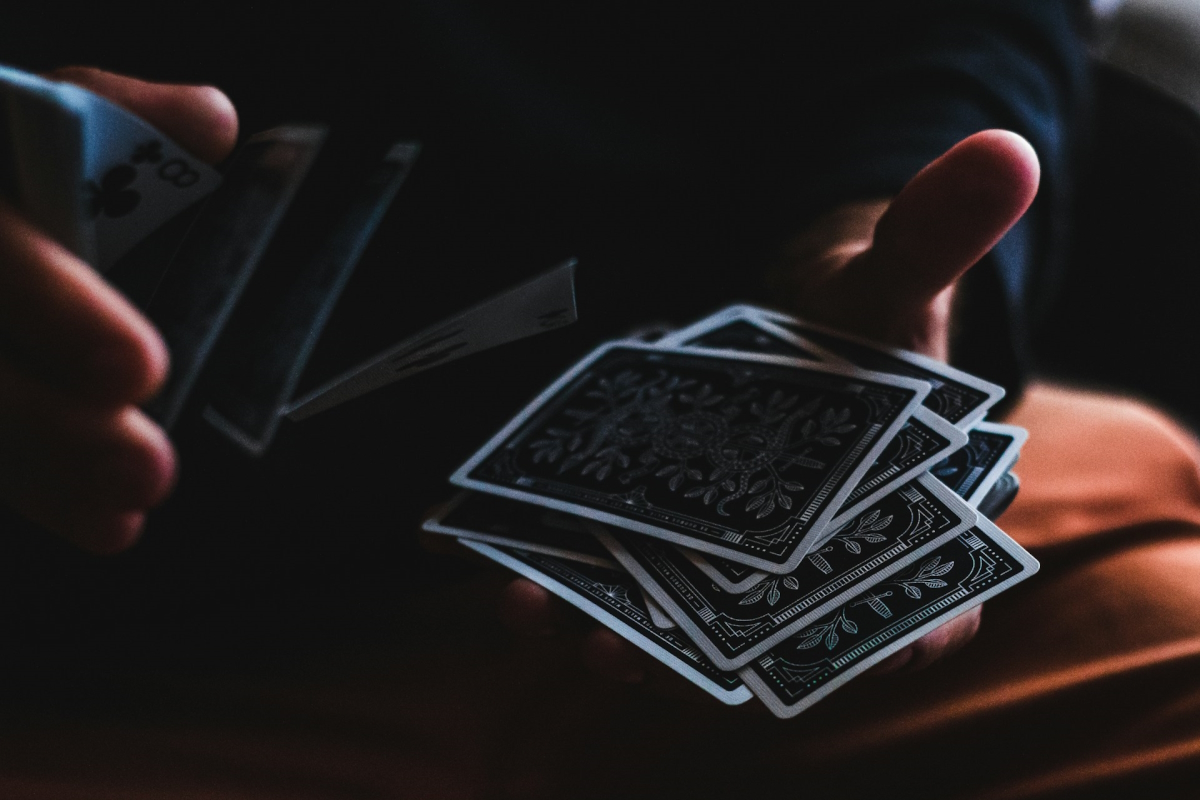
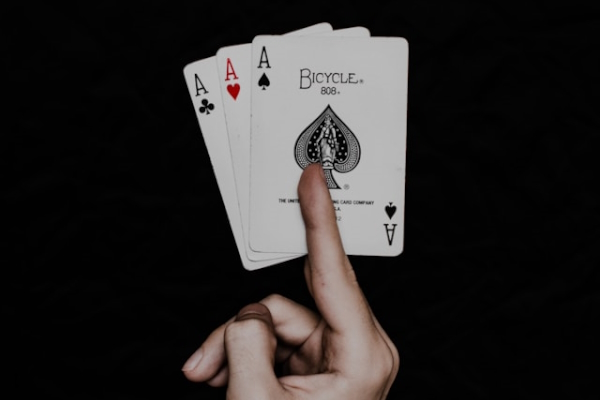
He laid down an ace, victory growing across his face into a broad smile as the other three men registered the win with heavy blinks. One man in particular grew a grim expression. His lips formed a tight line. It was his turn.
The winner picked an especially sensitive strip of skin, in an unmentionable place, and the loser dropped trow, bracing. A second player strung the long rubber band between two fingers on his left hand and pulled back as far as it would go with the right.
Snap!
Bellows sounded out from the three non-losing men as the loser gasped for breath, tears silently starting to flow down his cheeks before he hid his face in his hands. Immense pain was visible even if his expression wasn’t.
The uproar and ensuing riotous laughter brought attention from other prisoners. A few came over to see what the excitement was about.
A player explained the rules: they played a card game of choice and the loser had to endure a rubber band snap on the body part the winner chose. No holds barred.
“I wanna play,” a prisoner enthusiastically said as he eyed the loser, still crumpled in an excruciating heap on the concrete floor.
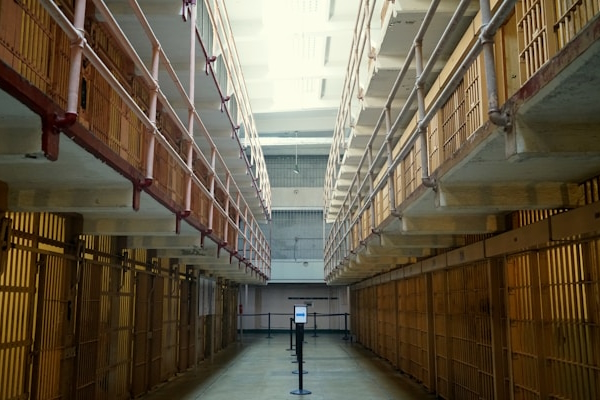
Everyone wanted in.
“It was so stupid,” my friend recollected later, shaking his head. “Such a dumb thing, but it was…. I mean, seeing grown, hardened men cry like that. Everyone wanted in.”
My friend had spent several years in state prison. To survive he had to learn a whole new set of skills, including passing the time.
Likely spurred on by sheer boredom, he and a few other prisoners started the game one day after one of them opened his hand to reveal a rubber band. An illicit rubber band.
The game was inane and painful. Welts would appear for days afterwards, like the mark of membership to a precision Fight Club.
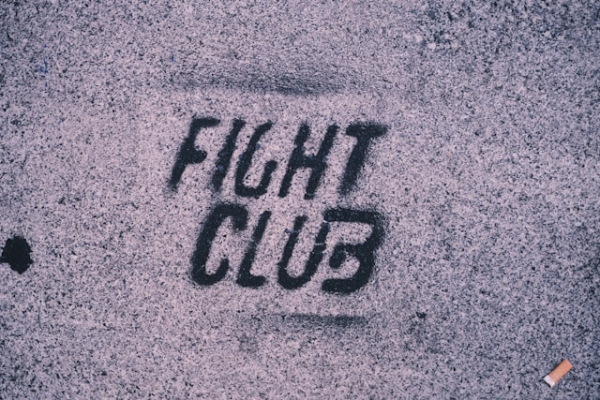
In the movie, alienated white collar men join an underground fight club to feel alive and connect to some supposedly primal, violent masculinity. They resist the emasculation and consumerism of society by fighting and releasing pent up emotions of inadequacy.
This is one potential read of the prison Rubber band Game. But I’m confident that prison didn’t lack avenues for violent masculine expression. Instead, I think this game touched on something softer.
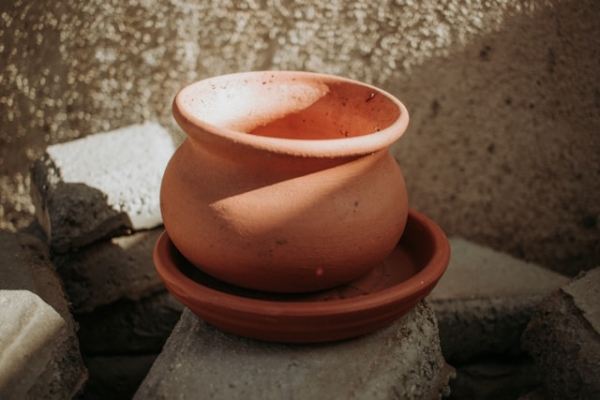
Our Shared Fragility
Even grown, hardened men locked in the “Pen” are fragile. Men who survive based on the carefully manufactured illusion of unwavering strength and dominance can snap. (Pun intended.) Their predicament and address can’t deny their ultimate humanness.
Buddhists, too, practice remembering that our bodies are fragile, like an “earthen jar.”
Our bodies will age. Each of us will get sick. None of us can escape death. We will be separated from everything and everyone we love. Our actions will live on as karma; we can’t escape the consequences.
These are the Five Remembrances of Buddhism
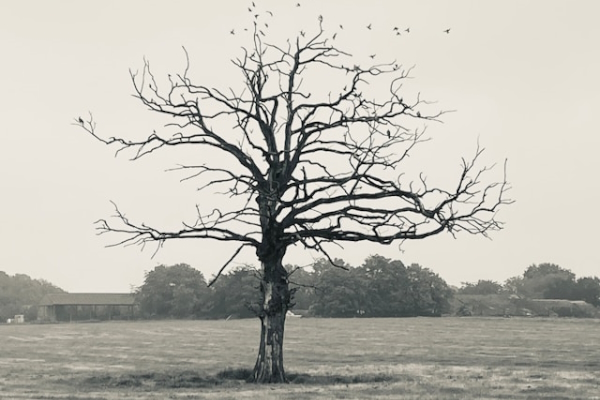
Like Memento mori, reminders of our inevitable demise can be unsettling or uplifting, depending on your point of view.
Remembering your impermanence and fragility can encourage you to:
- Be grateful for each moment, as each are precious – never to be experienced again
- Prioritize and focus your time and energy on who and what matters truly to you, letting go of the past, the distracting, frivolous drama of the present, and the intoxicating pull of the future
- Live fully in each moment, never postponing the living of your life for a later moment that is never guaranteed
- Walk with compassion and kindness because you know we are all vulnerable, we all suffer, and we will all die.
Within the strict and imposing limitations of prison culture, the men carved out a place where they could delight in the stark reminder of their shared fragility. In that moment of sick pain, there was nothing else. Even the strongest faced their frailty.
In a place where you can infinitely ruminate, regret, and tear yourself apart from the inside, this stupid game was perhaps a permissible, camouflaged respite of sorts. Its deeper meaning hung below conscious awareness, dressed up as male foolishness and sadism.
Yet it was a reminder: this moment is all you have. This moment is it, and one day it will all be gone. You, too, are fragile. We all are.
The moment is yours. Even in the Pen, you have choices – severely limited choices, but choices nonetheless.

The meaning of every action is expressed in the action itself
The last of the Rememberances is perhaps the most interesting given the setting of prison, a system created to punish past actions: “My actions are my only true belongings. I cannot escape the consequences of my actions. My actions are the ground upon which I stand.”
Beyond incarceration, the acts of each of the prisoners, of each of us, have consequences. The act is done and over; it is the karmic imprint that lives on.
In spiritual traditions, karma isn’t an immediate retribution. It’s not the imprisonment. Instead, it’s a cycle that extends over lifetimes. This cause and effect relationship applies to all of our actions, not just egregious crimes.
We don’t ultimately get to decide on the long-term consequences that we will carry with us, so we must always act with intention.
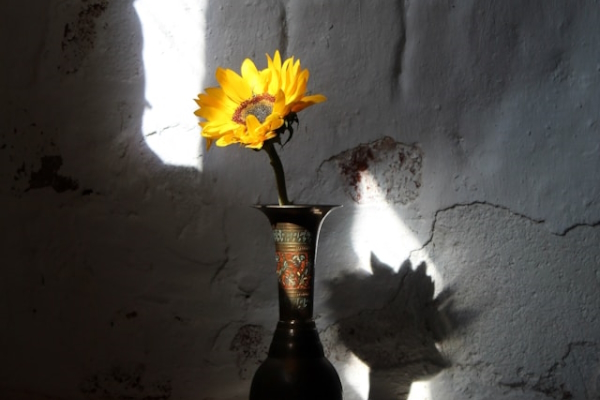
This Moment as Practice-Enlightenment
What you choose to do in this and each moment matters, but not just for karma’s sake. Actions should be preformed for the action’s sake and not for a future reward, a future state, or a future connection with the Divine. The “fruit” of the action is the action itself.
In this sense, there is no difference between training and becoming. We train as one who is already there. Our actions can be a complete expression of the realization we seek.
In Buddhism, this is known as practice-enlightenment or practice-verification. It’s the idea that practice is not a means to an end; instead actions or practice are the immediate, complete expression of enlightenment in daily life.
You are all that you seek. Or rather, your actions can be.
A Reminder
The Rubber Band Game was not practice-enlightenment, to be sure. But stupid games and stories like this are lessons from flawed men “just” passing time, both a recognition of our shared fragility and the importance of this moment, the only moment we have.
It can remind us to live with renewed gratitude, fullness, intentionality, and compassion.
It’s a reminder that our action now is all we have and all we are. Indeed, the action in this moment can be a full expression of what we seek.
This moment is yours. How will you live it?
Subscribe to Watering Your Garden
Handcrafted musings, personal event invites, and heartfelt tools guiding you back to the beauty within you? It’s a little something different in your inbox.
Subscribe to the Watering Your Garden newsletter and cultivate an intentional life through each rhythm of the year.
Photo credits on Unsplash, in order: Sergi Viladesau, Tim Photoguy, Claudio Schwarz, Vanessa Dyste, Ron Szalata, Amadej Tauses, Anne Nygard, and Klim Musalimov. Thank you.
Recent Posts
- Floating in the Ocean | Oneness
 How the ocean can be a reminder of your innate connectedness to bring into every moment of your life.
 - Running and the Spiral of Life
 How life spirals, revisiting recurring themes as we grow — as athletes, as parents, and as humans.
 - Pickleball and Shadow Work
 Using bad line calls to bring unconscious parts of our personality into awareness and become greater beings of Light.
 - Ease and Transformation: A Manifesto
 The guiding principles of Innermost Garden and what performance art teaches about deeply transformative experiences.
 - Signals to Hear | Depression
 Learning to listen to wholeness within after years of tuning it out.