

Balancing on the left, Kerri delicately moved her right foot forward through the brush without a sound. Her big toe silently landed first, her weight smoothly rolling through all toes and to the ball, side and heel of the foot as she evenly moved forward.
The whole time, her eyes stayed trained on the elk in front of her near the edge of the clearing in the woods.
It was early autumn, still warm during the day but a crispness held the morning air as she carefully breathed, unconsciously timing her own breath to that of the bull elk.
To keep off the chill, she wore a fur over her deer skin dress and her taller hide mocs – all items she carefully handcrafted herself over years of wilderness living – giving her the aesthetic of a historic mountain dweller.
She held a modern wooden bow. A local craftsman created it with just the right proportions and draw weight for her petite frame and gave it to her for a months-long solo survival trip.
She was seamless, totally integrated into her surroundings, as she slowly, intentionally moved forward towards the bull. Nothing else existed but the breath, the silent steps, and every movement of the browsing elk.
Then, almost instantaneously, she spun around, looking behind her with bow drawn, arrow nocked.
A crouching cougar intently stared back at her. Perhaps attracted by her fur, recognition slowly spread through his eyes that she was not, in fact, a good idea for breakfast. He turned and walked away, disappearing into the woods.

Assured the cougar was uninterested, she lowered her bow and returned her gaze back to the elk, seamlessly picking up her left foot to continue her slow approach.
If later asked about what she felt while hunting, she probably would have said immersed, intensely focused, maybe even instinctive. An experienced hunter and survivalist, she probably would not have mentioned fear.
But her experience is a vital lesson in the healthy emotion of fear.
Helpful Fear
We’re trained to associate fear (and most emotions) with an intense, overwhelming and unhelpful feeling. We think of negative panic, paralysis or horror. But fear (and all emotions) have a softer side that are gifts, helping us navigate the world by listening to our inner sensations.
Helpful, soft fear can show up just as Kerri experienced: alert, aware, intuitive, and mindful. Without these subtle emotions, she would have been out of step, disoriented from her surroundings, distracted from the present, perhaps moving with noise, and unaware of potential dangers.

Instead of, well…being fearful of fear, try noticing what it offers.
Thank you, fear, for centering me on the present moment.
You bring all of my abilities and senses to the task at hand, allowing me to deeply tune into what’s happening around me.
You help me slow down and rely on my instincts and intuition to guide me.
Drop inwards
When you sense fear arising, consider taking a moment to actually feel it in your body. It may come as increased heart rate, an acute awareness of your surroundings, or heightened sensitivity on your skin.
Then consider, what else are you sensing?
These can be from the five senses we often think of: sight, smell, hearing, taste, and touch. Or it could be felt as awareness in the body, changes in balance, internal sensations like pain, or temperature sensations. It could also be more imaginal, like visions, sounds, or a strong pull or gut-feeling – all common ways that intuition communicates to us.
Whatever you notice, recognize that this is important information your body is picking up. Trust it.
Then ask, is there something you need to do in this moment?
More than any other emotion, fear operates in the present.
- Do you need to check your back?
- Do you need to pause and take more time before diving into something?
- Do you need to trust yourself and try something new, even as it activates your heightened senses?
- Do you need to pull back, returning to yourself?
As we slip into the depths of winter, a natural time of introspection, I invite you to explore your emotion of fear.
Winter and Fear
In Traditional Chinese Medicine, fear is connected to water, the peak element in winter and the element associated with the kidneys. Imbalance in kidney energy can manifest as either a low drive with indecision, unhelpful fear, or sluggishness or as an excessive drive that leads to burnout, feeling ungrounded, or restlessness.
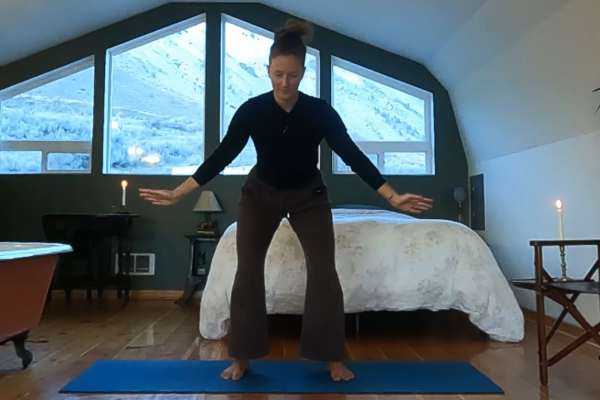
Try the sadhana practice for the heart of winter, which included qi gong movements to connect with and enliven your kidney meridian.
By slowing down, taking each intentional step one at a time, you can help your energy come into alignment. Honor this season of helpful fear, letting it intuitively guide you to wholeness and health.
Inspired by Kerri Lee? She offers empowering classes with her Sacred Cedars Wilderness School for all ages and abilities.
Curious about the range of emotions related to fear? Check out Karla McLaren’s heartfelt work on emotions in all of their states.
Subscribe to Watering Your Garden
Handcrafted musings, personal event invites, and heartfelt tools guiding you back to the beauty within you? It’s a little something different in your inbox.
Subscribe to the Watering Your Garden newsletter and cultivate an intentional life through each rhythm of the year.
Image credits all on Unsplash, in order: Cora Leach, Wilson Chen, and Ferdinando. Thank you.
Recent Posts
- Meditation 12: Grounding & the Root Chakra
 Reconnect to your root chakra to feel more grounded, safe, and energized in your body with this quick guided meditation.
 - Meditation 11: Spiritual, Mental, & Physical Balance
 The end of winter signals the gentle transition to outward life. In particular the spring equinox, when day and night are nearly equal, is a time of rebirth and balance. This Kundalini yoga meditation invites spiritual, mental, and physical balance. Specifically in this meditation, the hand position (mudra) acts to bring the two brain hemispheres… Read more: Meditation 11: Spiritual, Mental, & Physical Balance
 - Meditation 10: Speaking from Truth (Satya)
 Relax into stillness, become aware of your intent before you speak, and invite satya (truthfulness) into your life with this hypnotherapy-inspired meditation.
 - Meditation 09: Throat Chakra
 Bring clarity, compassion, and self-acceptance to your communication by connecting with the energy center at your throat, vishuddha.
 - Meditation 08: Compassion
 Connect with your deeper wisdom and the natural cycles of life in this Kundalini yoga meditation for ahimsa (non-violence).